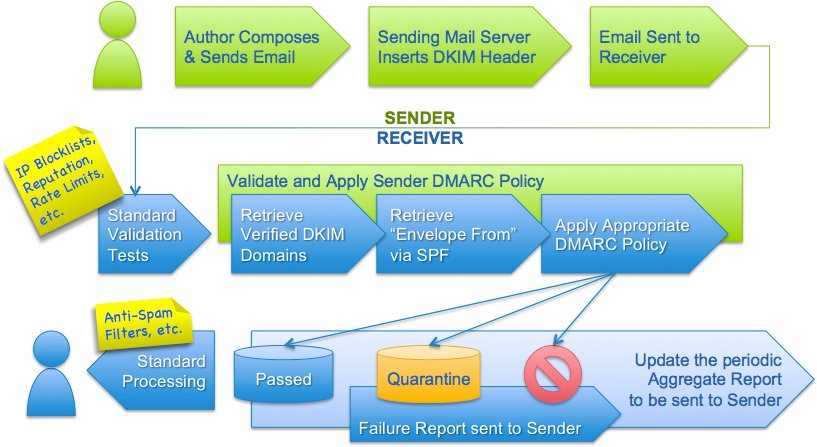
Implement Strategies To Achieve DMARC Alignment
Implementing DMARC policies are an essential step in securing email communication. It is important to ensure DMARC alignment to protect against malicious actors attempting to spoof a legitimate email address. The first step is to ensure that all of the domains and subdomains used to send email are properly registered and configured. Next, authentication must be set up for each domain. This can be done either with SPF or DKIM, or both.
Finally, it is important to monitor the delivery of emails for any suspicious activity. This can be done by setting up feedback loops or using a DMARC compliant email service. These steps will help protect against impersonation of legitimate email addresses, and ensure that emails are not rejected by receivers. dmarcreport.com is a fantastic site to learn about the DMARC alignment.

What Is DMARC Alignment And Why Is It Important?
Alignment is a key concept in the introduction of DMARC; it is the requirement that the domain used for either a passing SPF or DKIM result MUST match the domain of the From header in the email message body.
Though SPF and DKIM are mostly familiar technologies, it’s important to understand that neither SPF or DKIM, on their own, have anything to do with the From address, which is what humans typically see on an email. This is why phishing, spoofing, Shadow IT and other unchecked/misuse of domains run rampant today. There are very few controls that prohibit bad actors from sending an email as you. The primary control to observe and restrict email domain usage is DMARC.
Identifier alignment is at the heart of DMARC. It is what makes the connection between the authentication mechanisms of SPF and DKIM and the enforcement policy for unauthenticated mail as dictated in the DMARC record. Alignment refers to the relationship between the domain in the From Header address and the domains associated with SPF and DKIM authentication checks. Alignment requires that these domains match. Only emails that are aligned can pass DMARC. A mismatch in domains will result in a DMARC fail.
Type Of DMARC Alignment
DMARC alignment refers to the alignment of the domain used in the "From:" address of an email message with the domain used in the DKIM and SPF authentication records. There are two types of DMARC alignment: "relaxed" and "strict."
- Relaxed alignment: In relaxed alignment, the domain used in the "From:" address of an email message must match either the domain used in the DKIM or SPF authentication records. This allows for some degree of flexibility in the email sending process.
- Strict alignment: In strict alignment, the domain used in the "From:" address of an email message must exactly match the domain used in the DKIM and SPF authentication records. This is a more secure alignment, but it also means that any variations in the sending process may cause the email to fail DMARC evaluation.
By setting up DMARC alignment, organizations can protect their domain from unauthorized use, also known as email spoofing, by ensuring that any email messages sent from their domain are properly authenticated. This will increase the chances of their legitimate emails being delivered to the inbox and decrease the chances of their legitimate emails being marked as spam.

Securing Email Authentication: The Importance of Relaxed and Strict DMARC Alignment
Ensuring secure email authentication is critical to the success of any business. DMARC alignment is a valuable tool for ensuring that emails are both sent and received securely. Relaxed DMARC alignment allows email senders to authenticate in a less strict manner, but still provides protection against malicious emails.
On the other hand, strict DMARC alignment requires a higher level of authentication and provides more security. It is important to consider both relaxed and strict DMARC alignment when securing email authentication as each has its own benefits.
Strict DMARC alignment can protect against malicious emails and spam, while relaxed DMARC alignment allows for faster authentication. Businesses must evaluate their own specific needs to determine which DMARC alignment is most appropriate for their security protocols. Ultimately, utilizing both relaxed and strict DMARC alignment is essential for the most secure email authentication possible.
In summary, DMARC alignment is an important part of any email security strategy. DMARC helps protect your organization's emails from spoofing and phishing, and it enhances your email delivery and reputation. However, it's important to get your DMARC alignment right, as misconfiguring it can cause emails to be blocked. DMARC alignment can be achieved through SPF and DKIM authentication. Following the strategies outlined in this article can help ensure your emails are secure and delivered to their intended recipients.